Why Production Control Matters in Equine Care.
When it comes to equine grooming, how something is made matters just as much as what goes into it.
Horses don’t get a second chance if a product behaves unexpectedly. If something is off whether it’s weight, temperature, timing, or formulation, the impact isn’t theoretical. It ends up on a horse.
That’s why production method matters. Not from a branding perspective, but from a risk perspective.
Why smaller production runs reduce risk
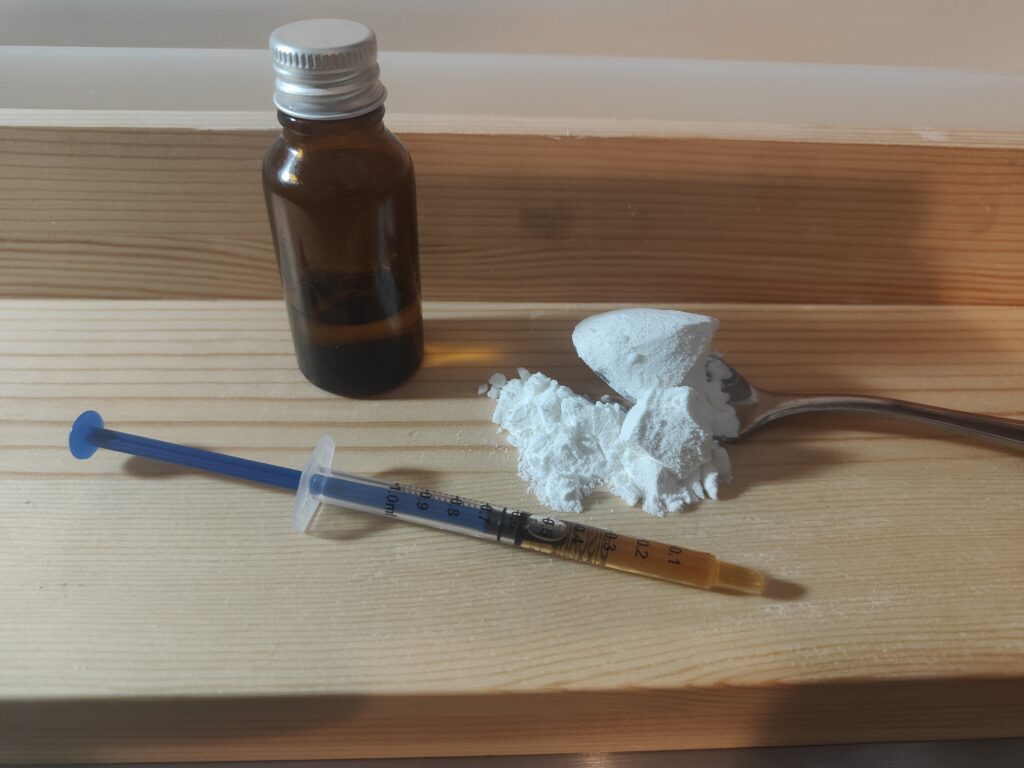
I started in small batches because I am building this from scratch. I do not have a factory or a production line and I do not want one at this stage. Working in small runs allows me to stay in control of every part of the process.
Equine grooming products are not forgiving. Small changes in weight, temperature, or timing can change how a product behaves once it is on a horse. When you are working with clays, oils, waxes, and pH-sensitive formulations, there is very little room for error.
Small batches make those errors harder to make in the first place. Measurements are done by hand, using spoons and small syringes rather than large pumps or bulk systems. Quantities are small enough that they are easy to check and difficult to get wrong. There is less mess, less waste, and the workspace can be cleaned properly between runs. Nothing carries over unnoticed.
Working this way also means all of my focus stays on one batch at a time. I can watch how it behaves as it is made. I can feel changes in texture. I can see if something is not quite right and stop before it becomes a problem. If something ever did go wrong, the impact would be limited. Fewer units would be affected and fewer horses would ever come into contact with it.
Larger batches are possible. Producing more at once is not the hard part. The difference is that when something goes wrong at scale, it affects far more product and far more horses before the issue is even noticed. That is not a risk I am willing to take while building something new. Furthermore, If a batch is wrong, it gets binned. It’s cheaper to lose product than to risk it going on a horse.
Starting small has allowed me to learn what works, build reliable processes, and repeat them consistently. As production grows, the intention is not to abandon this way of working, but to protect it. Scaling should not mean losing focus or increasing risk. It should mean keeping the same level of care, attention, and accountability, even as volume increases.
For me, small-batch production is not about being artisanal or exclusive. It is about doing better by the horses and knowing that every batch has had my full attention from start to finish.
Why this matters for horses, not production
All of this matters because horses are not test subjects. Once a product leaves the workspace, it doesn’t get adjusted or corrected. It gets used. Often on sensitive skin, legs, or areas that are already under stress.
Small-batch production keeps the margin for error as small as possible. It means decisions are made with the horse in mind, not the output target.
That mindset changes everything. It slows things down, but it also keeps responsibility where it belongs.
I would recommend reading more on our Technical & Safety page to see the effort there is which we put into the safety element.
Why starting this way matters long term
Starting this way has shaped how everything else is built.
The processes I am putting in place now are the ones I want to keep. They work because they are simple, repeatable, and easy to control.
As production increases, the goal is not to take shortcuts or hand control over to systems that assume nothing will go wrong. It is to grow in a way that keeps the same checks, the same attention, and the same accountability.
Getting this right at the beginning matters more than scaling quickly. Once bad habits are built into a system, they are hard to remove.
Final Thoughts.
This approach is slower. It takes more time. It involves more cleaning, more checking, and more repetition.But it means I know what I am making. I know how it behaves. And I know I am doing what I can to reduce risk before a product ever touches a horse.
For me, that is the right place to start.